Nigeria’s Democracy: A Deeper Look
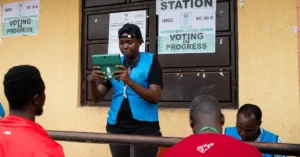
Nigeria’s democracy is often judged by presidential contests, but the real test of the system lies in state-level elections. Governorship and state assembly polls offer a sharper view of the country’s deep electoral cracks, where ethnicity, incumbency, local godfatherism, and informal networks of power collide. Looking closely at state-level contests, like the contentious 2023 Kebbi gubernatorial election, reveals that Nigeria’s national problems are reproduced and amplified at the subnational level.
The Kebbi State 2023 Election: A Case Study
Kebbi’s 2023 governorship race highlighted the fragility of Nigeria’s electoral processes. The contest between the All Progressives Congress (APC) and the People’s Democratic Party (PDP) was fiercely competitive, marred by irregularities, and eventually declared inconclusive by the Independent National Electoral Commission (INEC). Reruns followed amid allegations of vote buying, intimidation, and manipulation of results.
The central fault line in Kebbi was not only party rivalry but also the role of entrenched political elites. Outgoing governor Atiku Bagudu’s influence loomed large, as he tried to manage succession while contending with fractures within the APC. On the other side, the PDP leveraged ethnic and regional sentiments, mobilizing communities who felt sidelined by the APC-dominated establishment. What emerged was less a contest of policies and more a battle over who controlled patronage, territory, and symbolic representation.
How Local Politics Shapes Outcomes
In many states, including Kebbi, local politics is inseparable from identity. Candidates often build support around ethnic blocs or religious affiliations rather than broad ideological commitments. This ethnicization of politics makes elections high-stakes contests for access to state resources. Incumbency adds another layer. Sitting governors wield enormous influence: they control state funds, security apparatuses, and party machinery. Their backing, or opposition, can make or break a candidate. This power is not always exercised directly; sometimes it is mediated through informal power brokers, traditional rulers, religious leaders, or political “godfathers”, who mobilize voters and legitimize candidates.
Informal Power and Godfather Politics
Across Nigeria, “godfatherism” remains a defining feature of state politics. In Lagos, for instance, the influence of Bola Ahmed Tinubu has shaped electoral outcomes for decades, even before his ascent to the presidency. In Kano, alliances with religious clerics and local kingmakers determine the strength of gubernatorial bids. In Anambra, business elites and regional associations act as power brokers. These actors blur the line between formal democratic competition and informal bargaining, reinforcing the idea that elections are negotiations within a closed elite circle, not open contests among equals.
State Elections as Mirrors of National Fault Lines
The tensions visible in state-level elections are scaled-up versions of Nigeria’s national politics.
- Ethnicity and Religion: Just as presidential contests often split along North-South or Christian-Muslim lines, state elections reflect localized versions of identity divides.
- Incumbency Advantage: The grip of governors mirrors the dominance of ruling parties at the center, where incumbents enjoy financial and institutional leverage.
- Fragmented Institutions: INEC’s struggles in administering credible polls at the state level echo the broader institutional weaknesses of Nigeria’s electoral framework.
- Informal Networks: National godfathers often rise from their control of states, projecting local influence into federal politics.
The Kebbi case shows how instability at the state level undermines trust in Nigeria’s democracy at large. When reruns, legal battles, and elite bargains replace transparent electoral outcomes, citizens’ faith in democratic institutions erodes.
Conclusion
State-level elections are not side stories in Nigeria’s democracy; they are the frontlines where the country’s deepest electoral weaknesses play out. From Kebbi to Kano, Lagos to Rivers, contests for governorships and assemblies reveal how ethnicity, incumbency, and informal power entrench elite control. They also foreshadow national trends, showing that unless reforms tackle these subnational dynamics, Nigeria’s democracy will remain vulnerable.